Screening Fundamentals
Engineering insights that transform your screening performance
Screening Basics
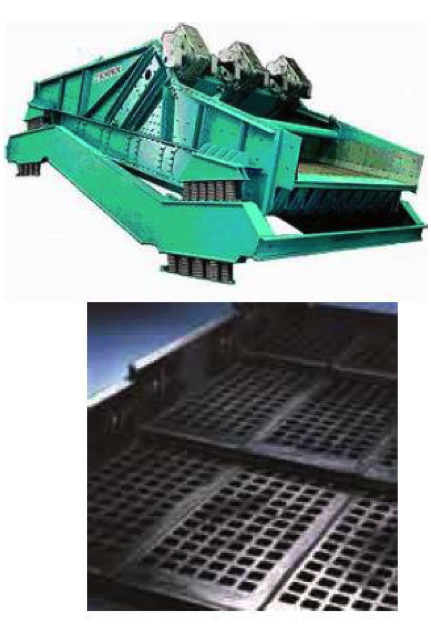
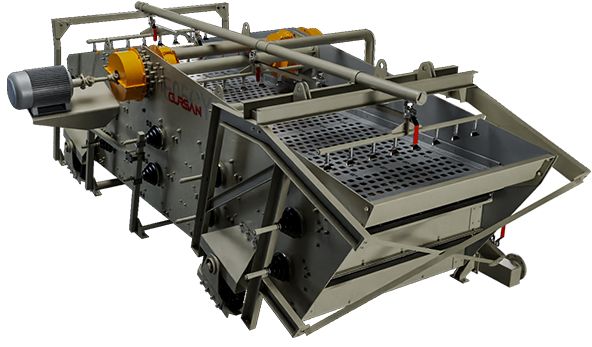
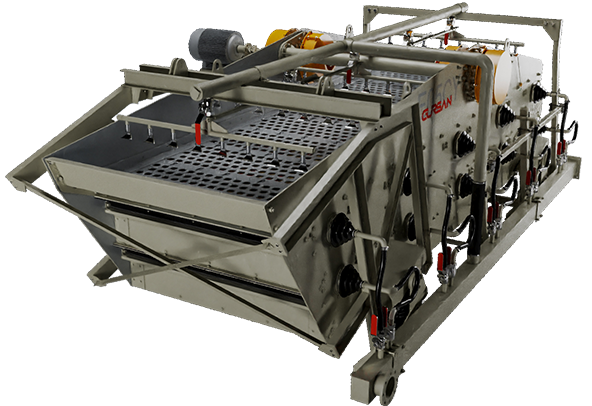
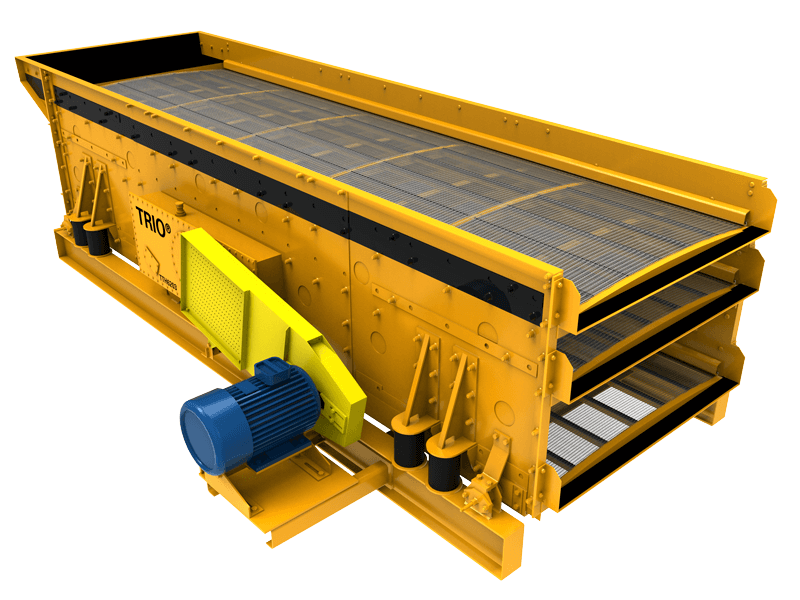
- A 20° inclined screen is typically used for screening and sizing applications.
- Decreasing the inclination slows the movement across the table thereby decreasing capacity but improving efficiency.
- Above 12 mm, dry screening is preferred.
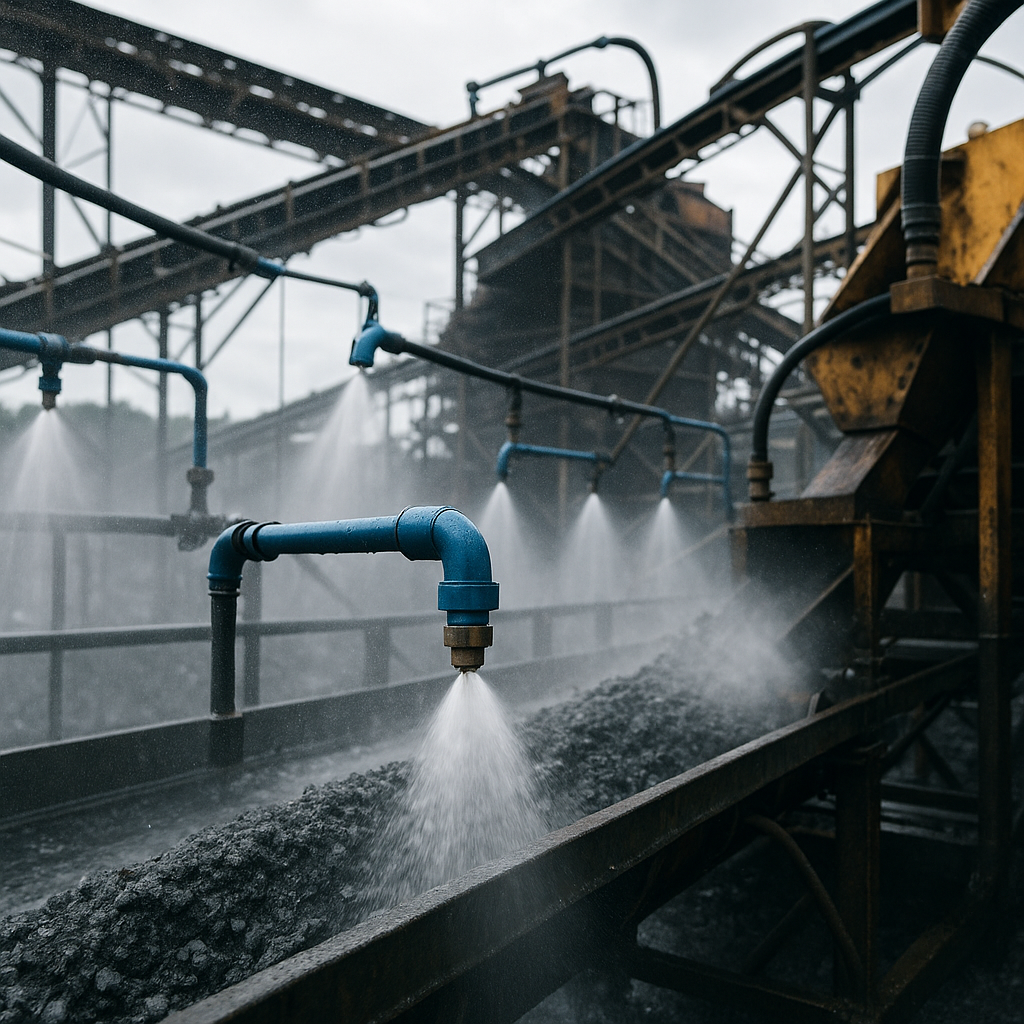
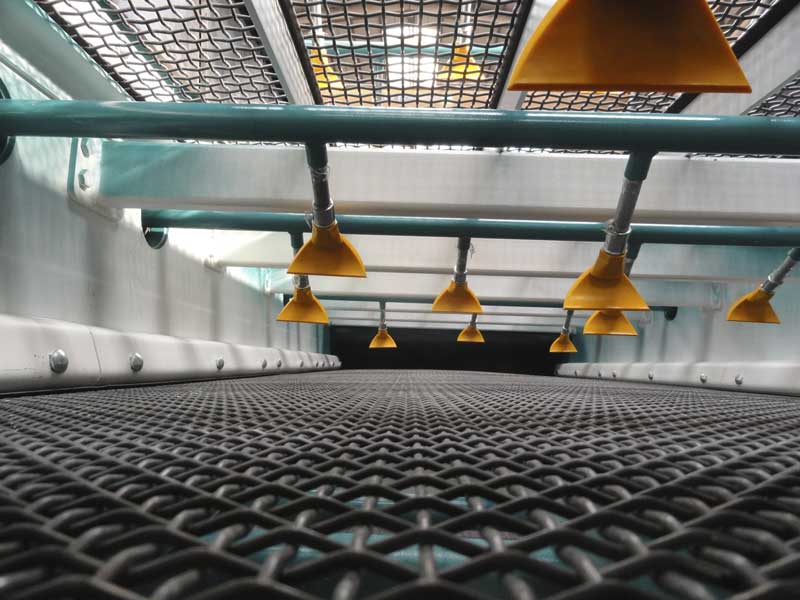
- Below 12 mm, wet screening using a low-pressure water spray is preferred with a water flow rate of 0.8- 1.4 m3/t/h.
- Actual water requirements dependent on application.
01
Screening Fundamentals
The most commonly used method for separating particles based on particle size is screening.
In screening, two basic processes are taking place.
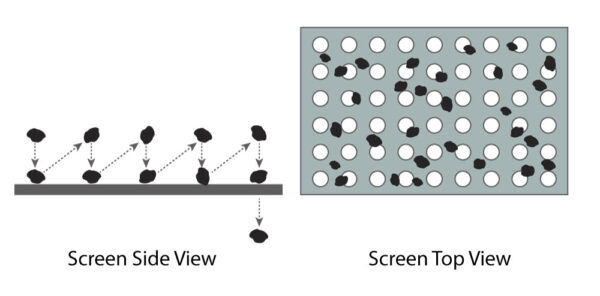
- Stratification – The process whereby the large particles rise to the top of the vibrating material bed while the small particles shift through the voids and form the bottom of the bed.
- Probability of Separation – The process of particles reporting to the screen apertures or openings and passing through if the particle size is less than the aperture
02
Screen Motion
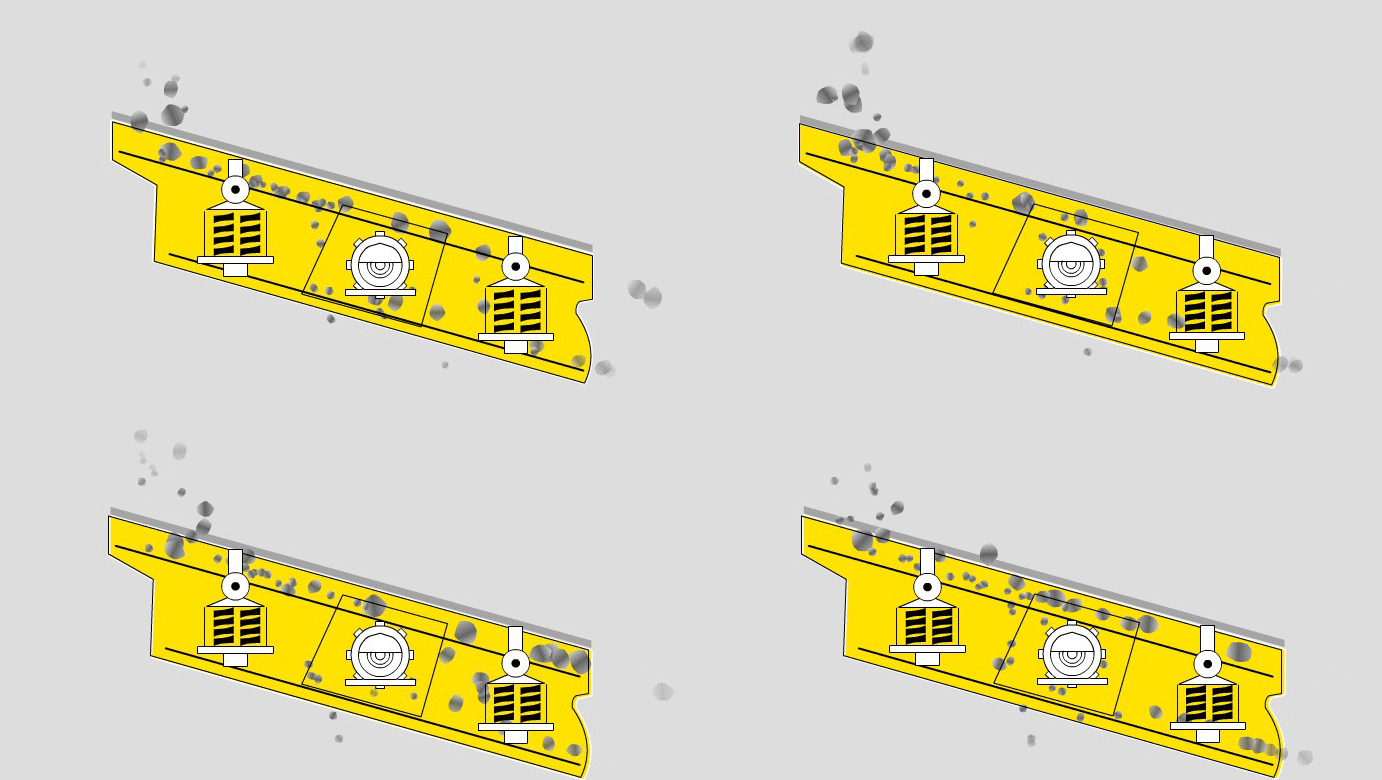
The processes of particle stratification and probability are caused by the vibration of the screen.
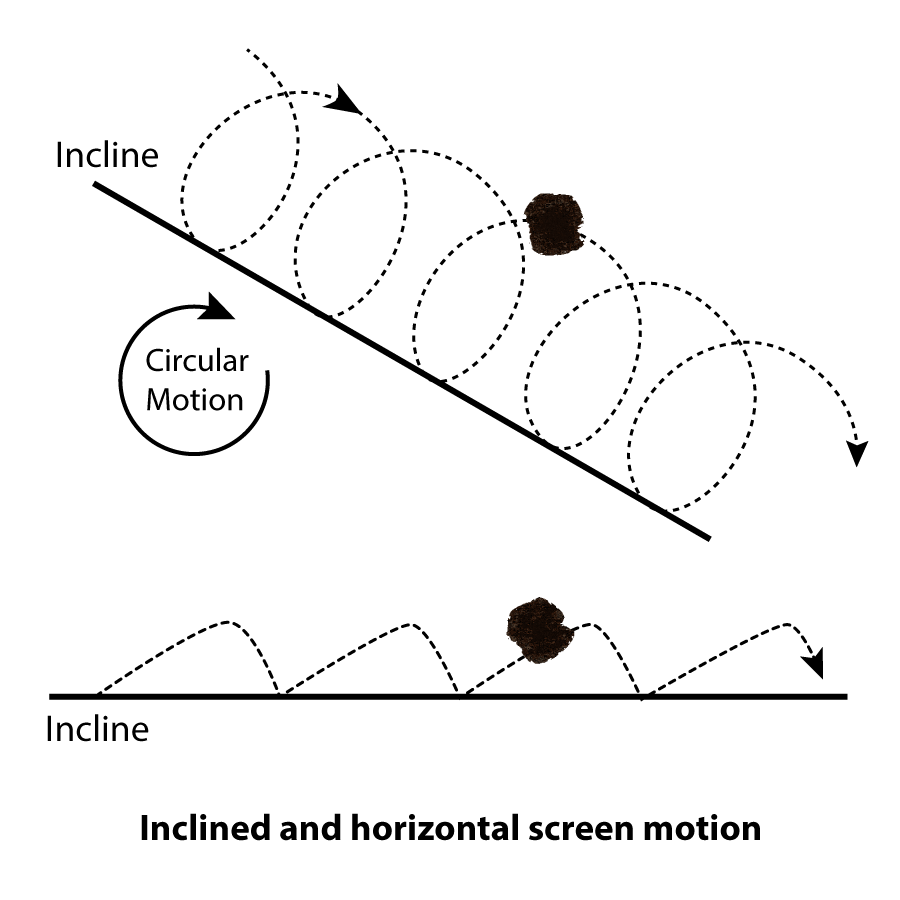
On inclined screens, the vibration is caused by a circular motion in a vertical plane of 1/8 to 1/2- inch (3.175/12.7mm) amplitude at 700 to 1000 cycles/min. The vibration lifts the particles up, thereby, causing stratification. The incline will cascade the particles down the slope and introduce the probability of particle passage through the screen.
Horizontal screens, which are used only when height restrictions prohibit inclined screens, transfer the material using a straight line motion at an angle of approximately 45 degrees to the horizontal. This motion lifts the particles up from the screen surface and moves the particles toward the discharge end.
03
Screen Feed Rate Factors
Rule of thumb :
- For particles weighing 1.6 t/m3 or greater, the bed depth at discharge should never be greater than 4 times the aperture size in the screen.
- For particles less than 1.6 t/m3, the bed depth is limited to 3 times the opening size.
Other factors controlling stratification include:
- Material travel rate (length/time) is a function of:
- material specifications;
- screening media specifications;
- depth of bed;
- stroke characteristics;
- slope of screen.
- Stroke characteristics
- amplitude;
- direction of rotation;
- type of motion;
- frequency.
- Surface moisture – high surface moisture hinders stratification.
04
Screening Probability
Upon stratification, the particles having a size less than the smaller screen aperture pass through the screen to the underflow. Particles having a size significantly smaller than the aperture size pass through easily.
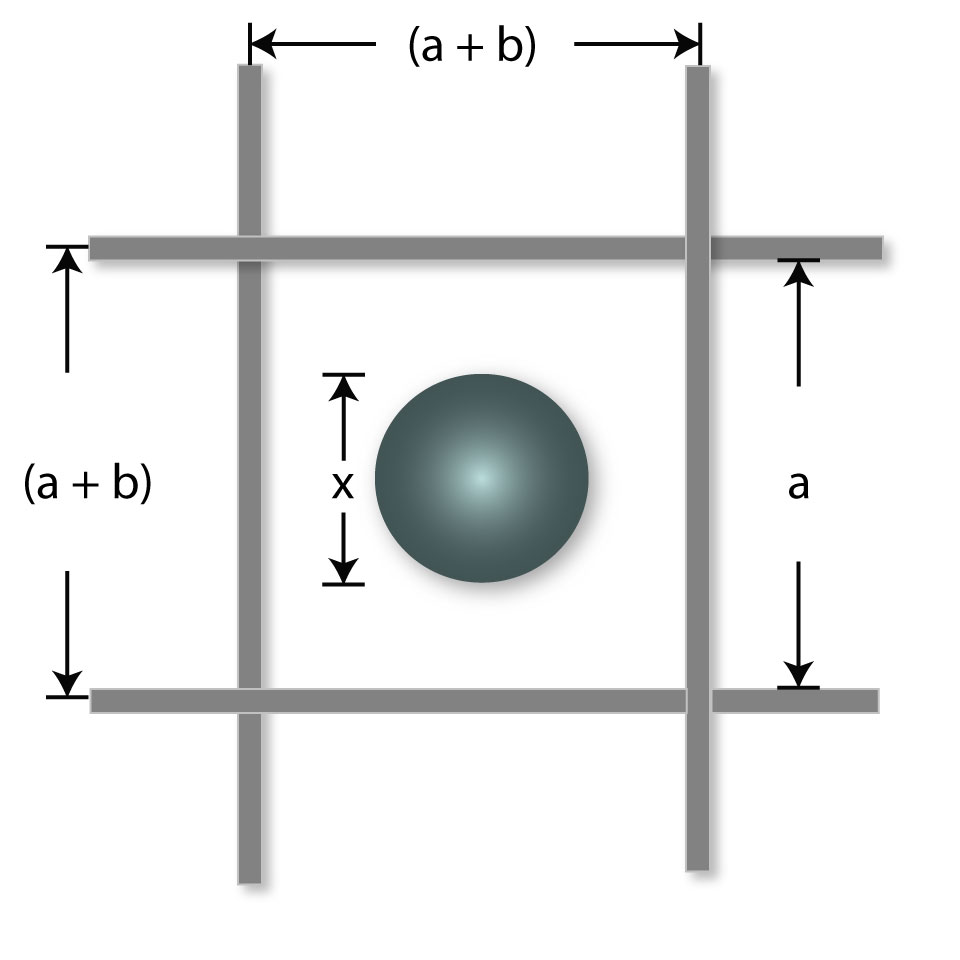
However, the probability of P of a particle passing through the screen in one trial decreases as the particle size approaches the aperture size,
a = screen opening size;
x = particle diameter
b = diameter of wire
The probability of a particle being retained on a screen during a single trial Q is: Q = 1-p
The overall probability of a particle being retained on a screen R is:
m = number of screen trials which is a function of screen length, amplitude and frequency and assumes good stratification.
According to this simplistic model, the value of P increases with:
- Increasing screen opening a;
- Decreasing particle size x;
- Decreasing wire diameter b.
05
screening concepts
The probability P would increase over several trials m, and that m can be increased by increasing the length of the screen. Therefore, a perfect screening scenario can only be achieved from an infinitely long screen.
However, the number of trials m possible on a given screen is a function of the amount of open area, As, available.
As – a2 / (a+b)2 = for square apertures
The amount of open area decreases significantly with a decrease in aperture size, e.g., 60% to 30%.
06
Perfect Screening vs. Reality
As mentioned previously, a 100% screening efficiency is not commercially practical since a screen of infinite length would be required.
A “perfect” separation is typically defined from a sieve analysis in which the sample is vibrated on a sieve for a period of 1 to 3 minutes. This is equivalent to approximately 25- to 55m long screen. A screen length of 7.3m is the largest manufactured screen.
The “commercial perfect” screening practice is typically based on efficiency values in the order of 90% to 95%, indicating that 5% to 10% of the undersize particles report to the screen overflow.
07
Screen Blinding Effects
Screen blinding reduces the number of openings in the screen, thereby decreasing the number of successful trials m.
Blinding is typically caused by particles having a 50% chance of passing through the screen. The critical particle size range that causes blinding is
0.5 < X/a < 1.5
Therefore, sizing of material having a large portion of material in the size class should be avoided. High moisture and clay in the feed causes binding
08
Mass Flow Rate Through a Screen
The mass flow rate at which particles flow through the screen varies as a function of distance from the feed point.
- From position a – b, the vibration of the screen causes the particles to stratify and the particle passage rate increases with distance .
- From position b – c, a maximum mass flow rate through the screen occurs and is referred to as “saturation screening”. This is due to the passage of the particles having a size significantly smaller than the aperture size.
From position c – d, the flow rate through the screen sharply declines since only those particles having a low probability remain.
09
Feed Rate vs. Efficiency
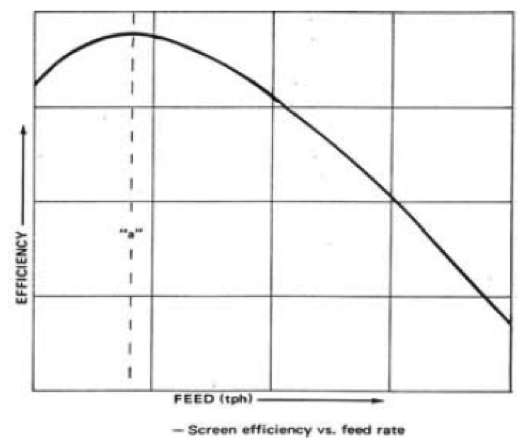
screens are designed to treat a given mass flow rate at which point a maximum screening efficiency value is obtained as shown below:
- At very low feed flow rates, screening efficiency increases with the feed rate. This is due to the fact that a sufficient amount of coarse particles is required to prevent excessive bouncing caused by screen vibration.
- At the point “a”, screening efficiency achieves an optimum value.
- Feed rates greater than the optimum value result in a decline in screening efficiency due to an increasing bed thickness and the inability of the undersize particles to report to the underflow stream, i.e., mass flow rate through the screen is limited.
10
Challenges in Screening Operations
Screen Blinding
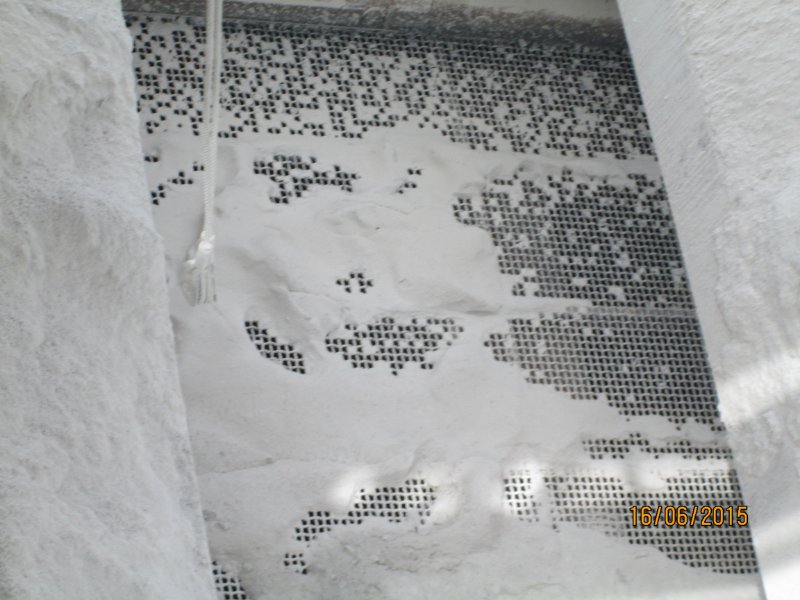
Occurs when particles clog or block the screen apertures.
Most common with particles sized between 0.5x to 1.5x the aperture.
Exacerbated by high moisture content, clay, or sticky materials.
Inefficient Stratification
If material isn’t properly stratified, fine particles may not reach the screen surface and remain in the oversize product.
Caused by improper vibration settings or feed conditions.
Poor Feed Distribution
Uneven feed can cause overloading in parts of the screen, leading to poor separation and reduced efficiency.
Excessive Bed Depth
When bed depth exceeds the guideline (3–4x the aperture size), fine particles can’t reach the screen surface, reducing separation effectiveness.
Incorrect Screen Motion or Slope
The wrong type of screen motion (e.g. circular vs linear) or slope angle can negatively affect throughput and separation quality.
High Recirculating Loads
Overuse of undersize recirculation can overload screens and reduce overall efficiency.
Wear and Tear
Prolonged operation leads to worn apertures and deck structures, impacting separation precision and increasing downtime.
Spray System Issues
Inadequate or poorly directed water sprays lead to high moisture carryover, poor material separation, and downstream handling problems.
A peak of our
landscape
creations
At Simaflex Engineering, we believe engineered spray systems can do more than just meet a spec — they can move the needle on ore quality, reduce downtime and deliver a higher-grade product.
Our vision is to partner with forward-thinking miners who are ready to expect a higher yield from their ore. We don’t just supply components — we design with intent, engineer for longevity, and deliver solutions that shape better outcomes across the full project lifecycle.